
Guide · Logistics
The pharmaceutical cold chain: requirements, risks and monitoring
From the warehouse to the final handover: how a temperature-sensitive product stays within 2–8 °C, and how that is proven.
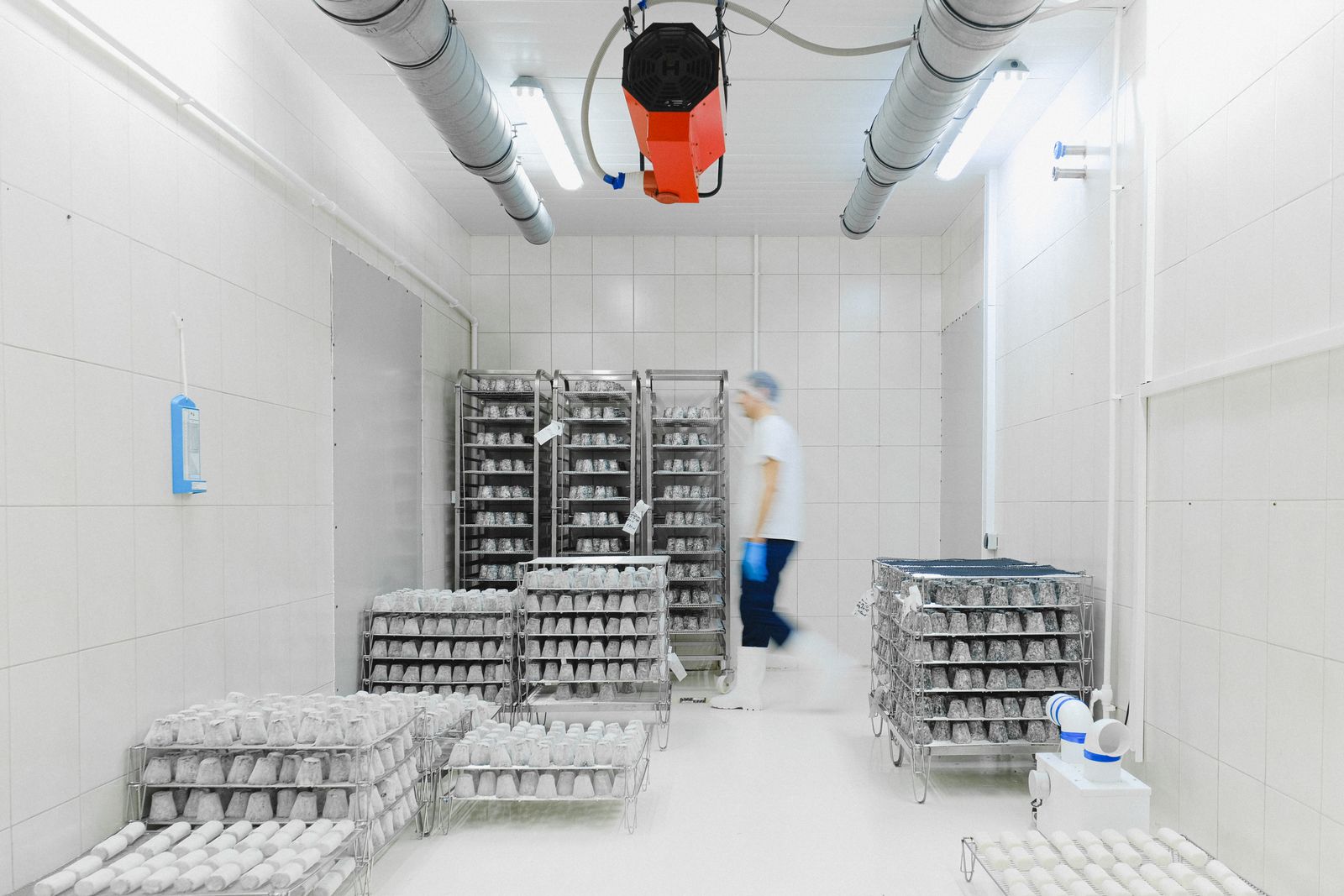
Some of the most valuable modern medicines — vaccines, insulins, biologicals — share a common weakness: temperature. Kept outside their recommended range, they can lose efficacy with no visible change: same box, same liquid, different therapeutic effect. That is why the “cold chain” is not a logistics detail but a condition of product quality.
What the cold chain actually means
In pharmaceutical distribution, the cold chain means keeping a product within 2–8 °C without interruption, from release by the manufacturer to administration. “Without interruption” is the key phrase: a high-performance refrigerator does not compensate for an hour spent on a loading dock in July. Every link — warehouse, vehicle, transit packaging, receiving — must hold the range and be able to prove it.
The real risk: temperature excursions
An “excursion” is any departure from the validated range, however brief. Consequences range from negligible to the total loss of a batch — and the difference cannot be guessed: it is assessed against the product’s stability data, provided by the manufacturer. Without continuous temperature records an excursion cannot even be assessed properly; the product becomes suspect as a whole, and the prudent decision is destruction. With complete data, by contrast, the manufacturer can confirm whether the deviation fits within the studied stability margins.
How monitoring is done properly
- Dedicated equipment: calibrated data loggers placed next to the product, not just the vehicle’s own sensors.
- Continuous recording: temperature measured at short intervals along the whole route, with data downloadable at delivery.
- Qualified packaging: passive solutions (insulated shippers with cooling elements) or active ones (refrigerated containers), validated for the actual route duration plus a safety margin.
- Seasonal planning: the same lane needs different configurations in winter and summer; packaging is chosen on the thermal profile of the route, not on habit.
- Deviation procedures: who is notified, within what time, what happens to the product until a decision. Improvisation afterwards always costs more than a procedure prepared beforehand.
Storage: the less visible half of the chain
Transport gets the attention, but most hours in the life of a temperature-sensitive product are spent in a warehouse. What matters there: thermal mapping of the premises (finding hot and cold spots), alarms configured on the right thresholds, backup equipment for power failures, and operational discipline — doors kept closed, short handling times, cold chain products processed first at receiving and dispatch.
What to ask your logistics partner
Three things sum it up: proof they can hold the range (equipment, qualified packaging, procedures), proof they monitor it (continuous records, handed over at delivery) and proof they know what to do when something goes wrong (the excursion procedure, with concrete examples). If any of the three is missing, a good transport price is only the postponement of a bigger cost.
Details of our solutions are on the pharmaceutical logistics page; for clinical trial projects involving temperature-sensitive products, see also the comparator medicines service.